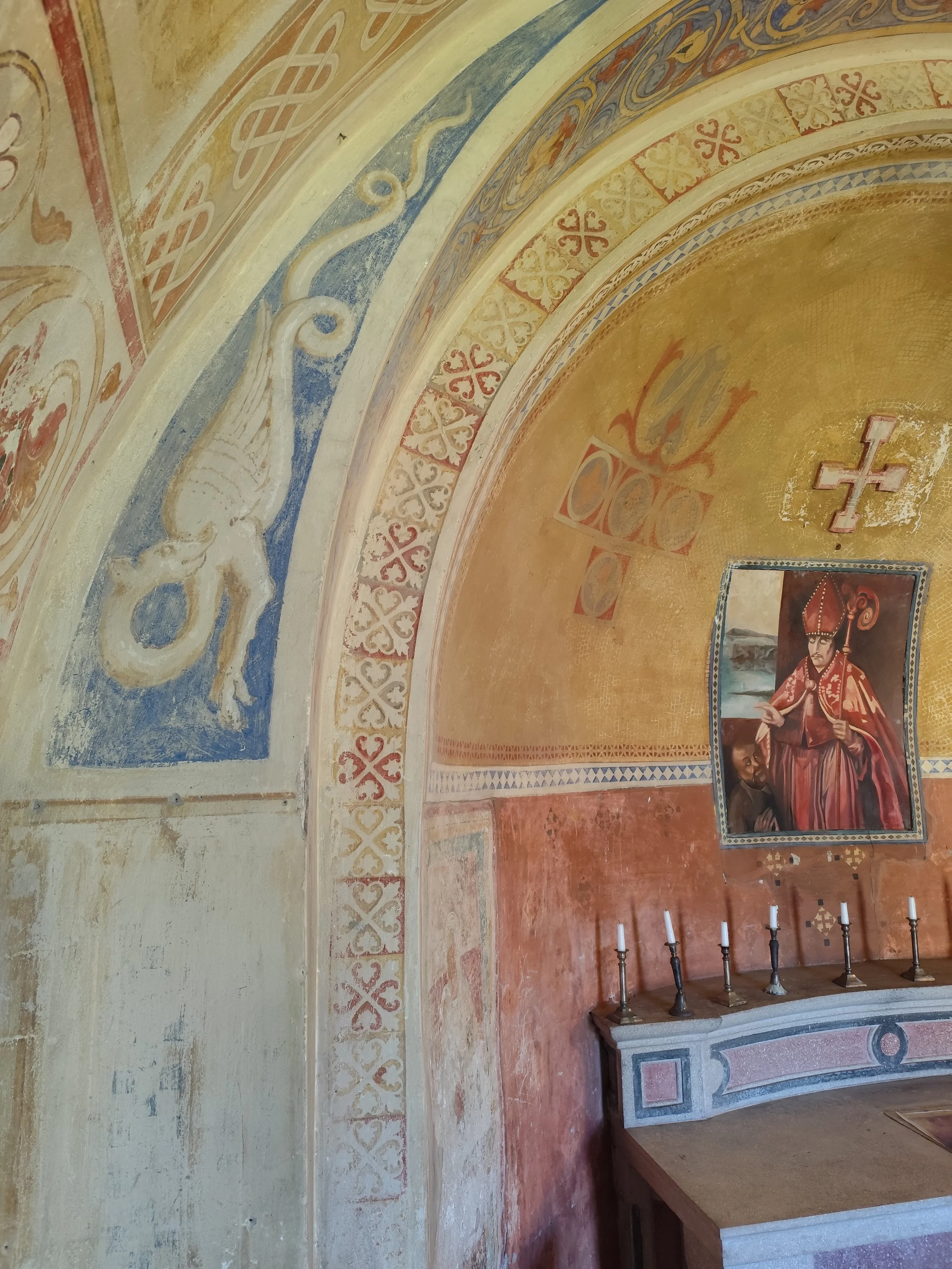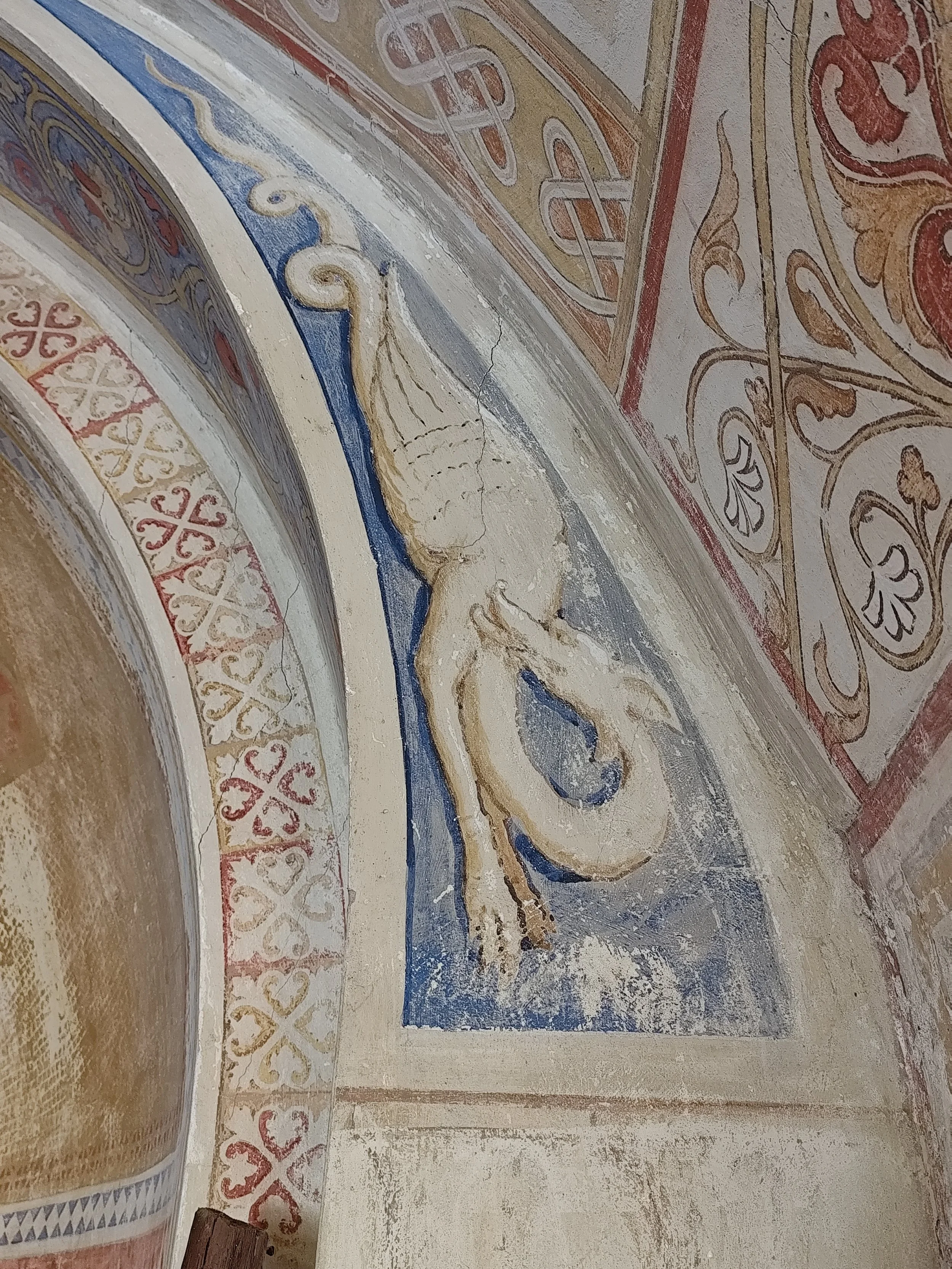
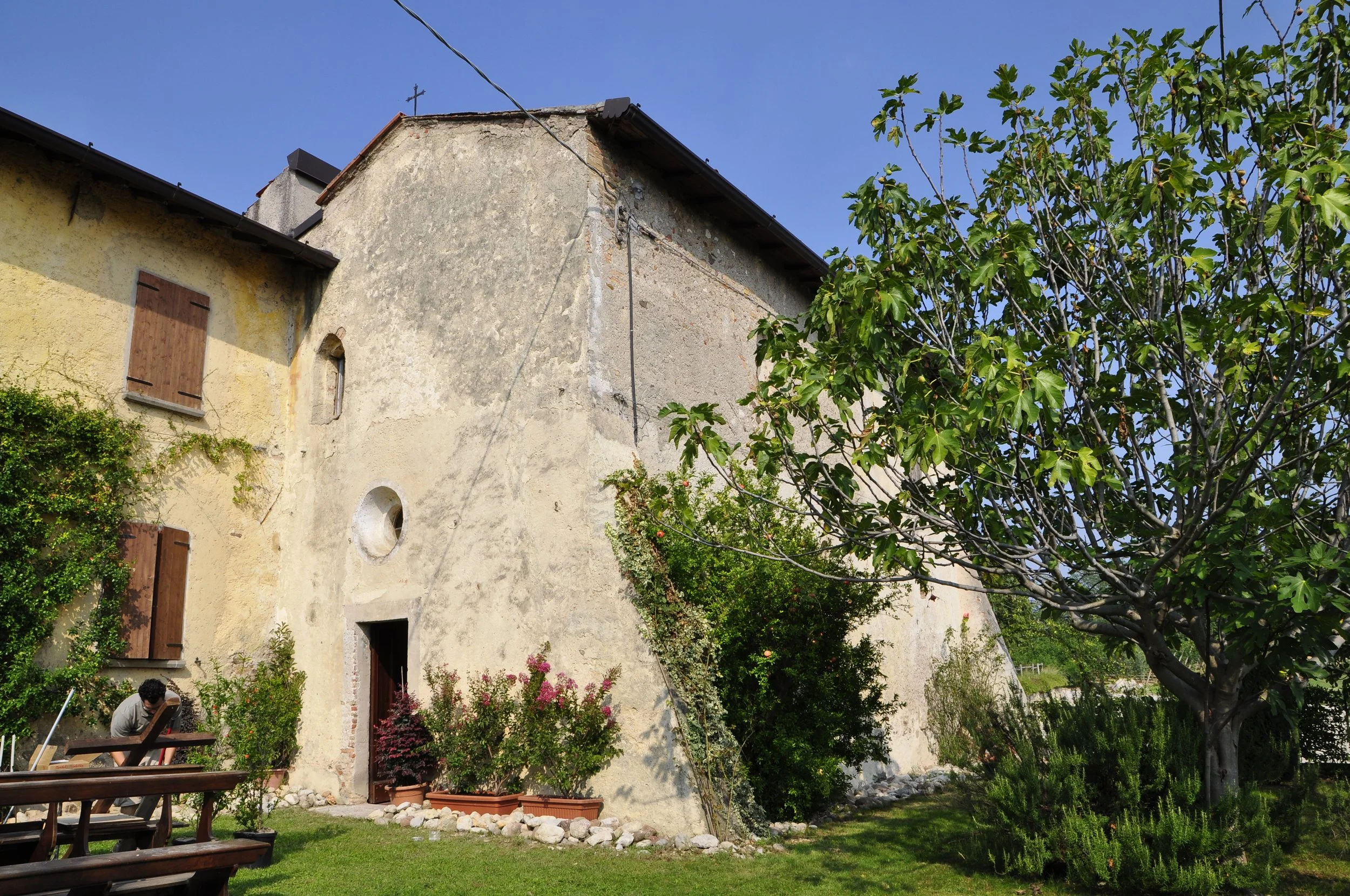
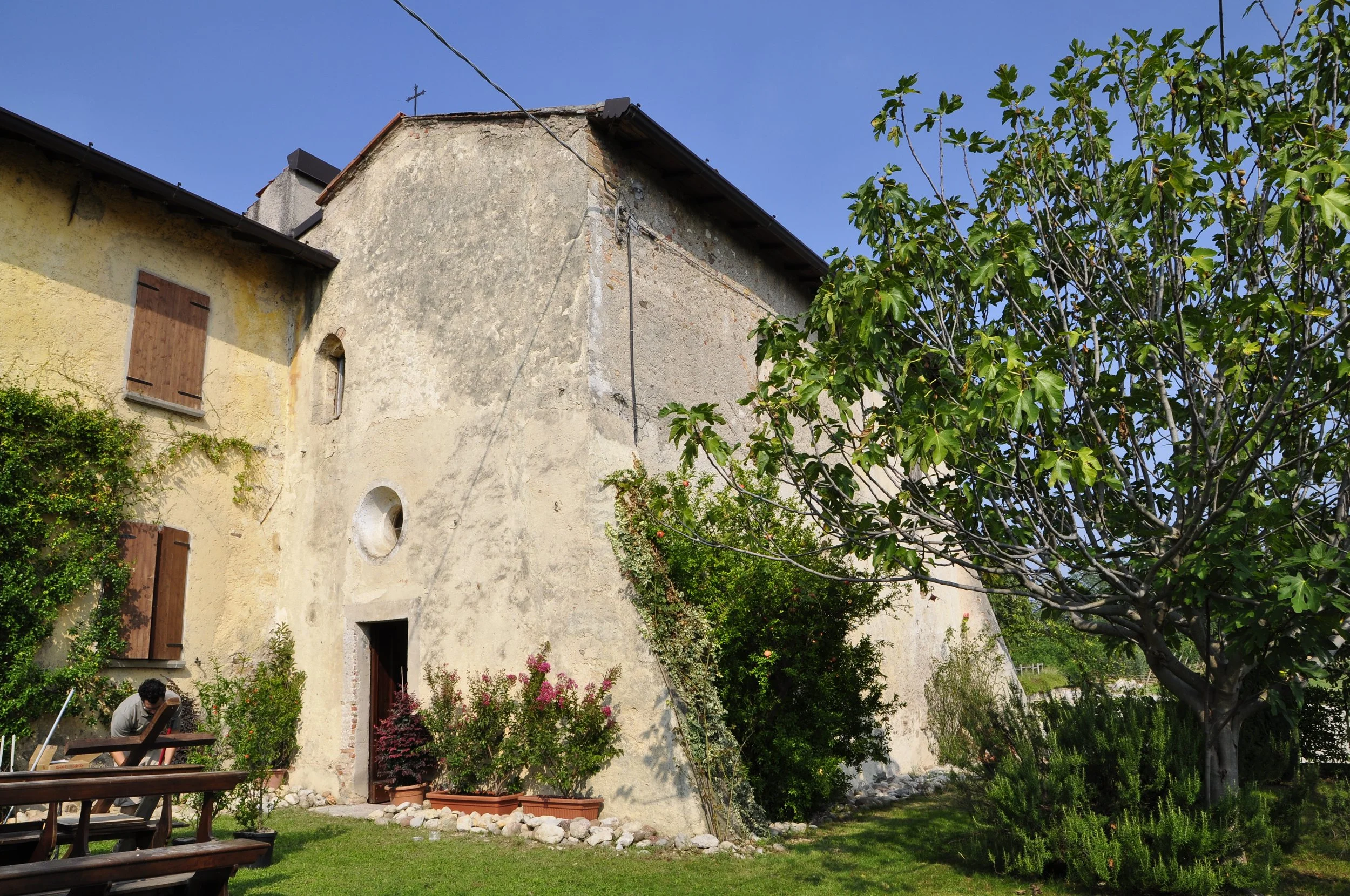
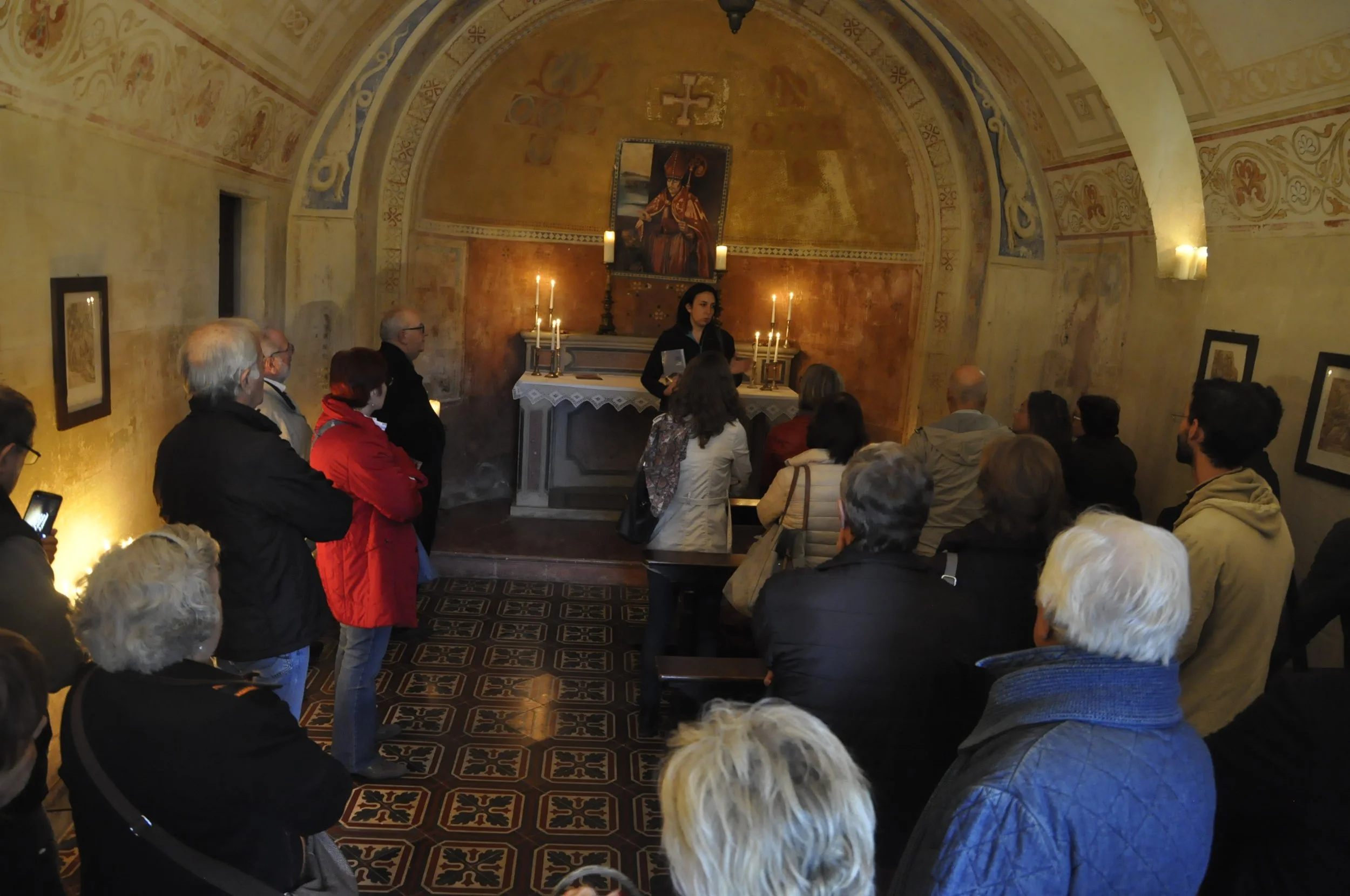
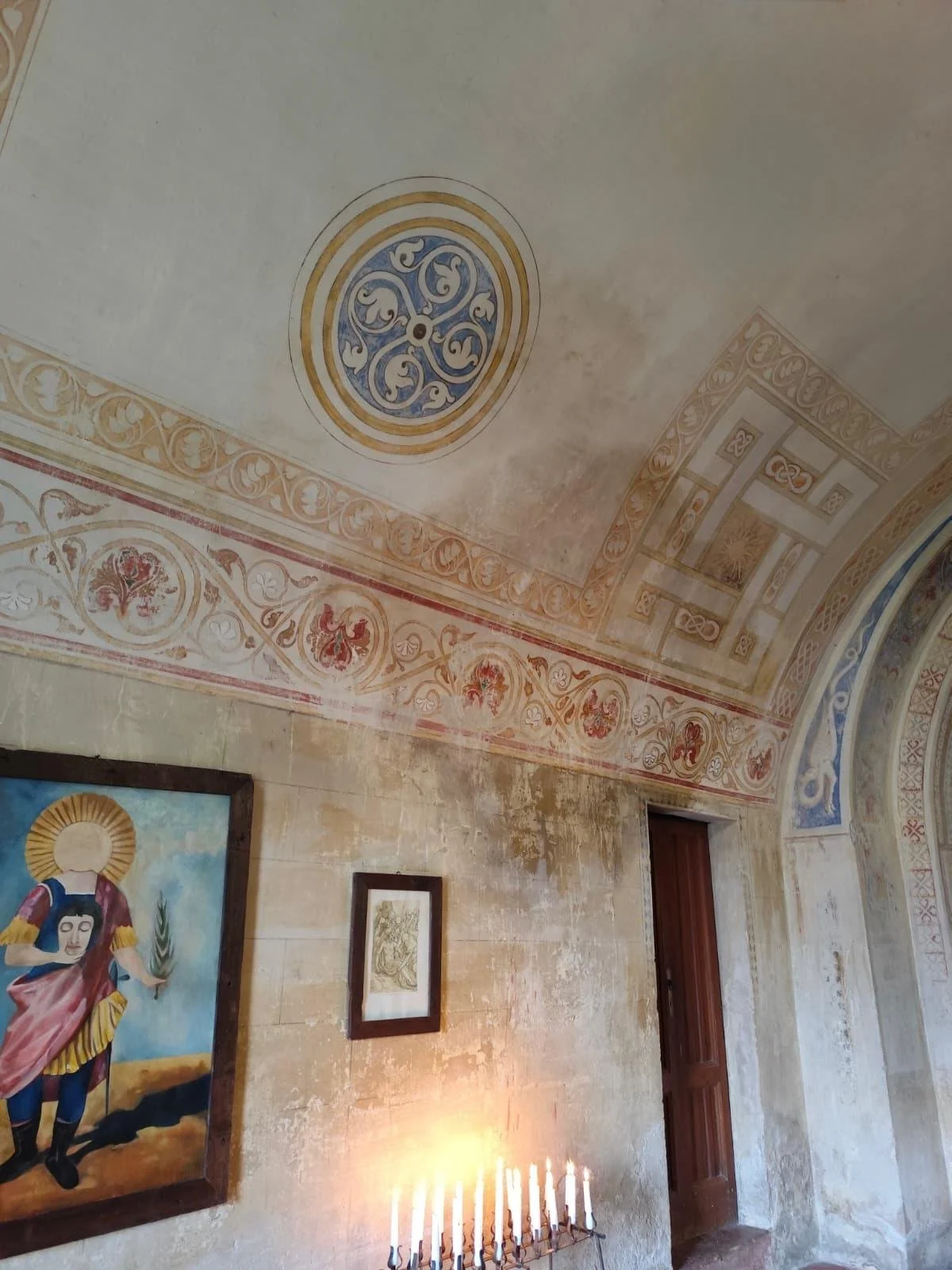
Within Podere Selva Capuzza lies Borgo San Donino, a complex of holiday apartments whose name derives from the church located within it: the little Church of San Donino, a small jewel dating back to 1280, in the heart of the Lombard Romanesque period. It is a place that preserves not only spiritual memory, but also an artistic heritage made of symbols, stone, and silence. Among its architectural details, decorative motifs of clear Celtic origin emerge: interlaces, knots, and spirals that tell a story far older than its walls.
INTERLACES IN LOMBARD ROMANESQUE ART
In 13th-century Lombard Romanesque art, the influence of Celtic decorative motifs was well established, the result of a long cultural evolution. This was not an isolated phenomenon, but the outcome of successive layers: Gallo-Roman traditions, Lombard contributions, and influences from Romanesque Europe gradually merged, giving rise to a unique ornamental language.
The most widespread motifs are the so-called geometric interlaces—true “knots” that chase one another without beginning or end. They recall insular models of Celtic tradition, yet were reinterpreted by Lombard craftsmen, such as the renowned Comacine masters, who adapted them to their own artistic and symbolic context.
Alongside the interlaces, we often find zoomorphic elements: animals, fantastic creatures, sometimes stylized dragons, blending with the decorative lines until they become part of a single ornamental flow. It is an art form that never separates shape from meaning: every line is a story, every curve a symbol.
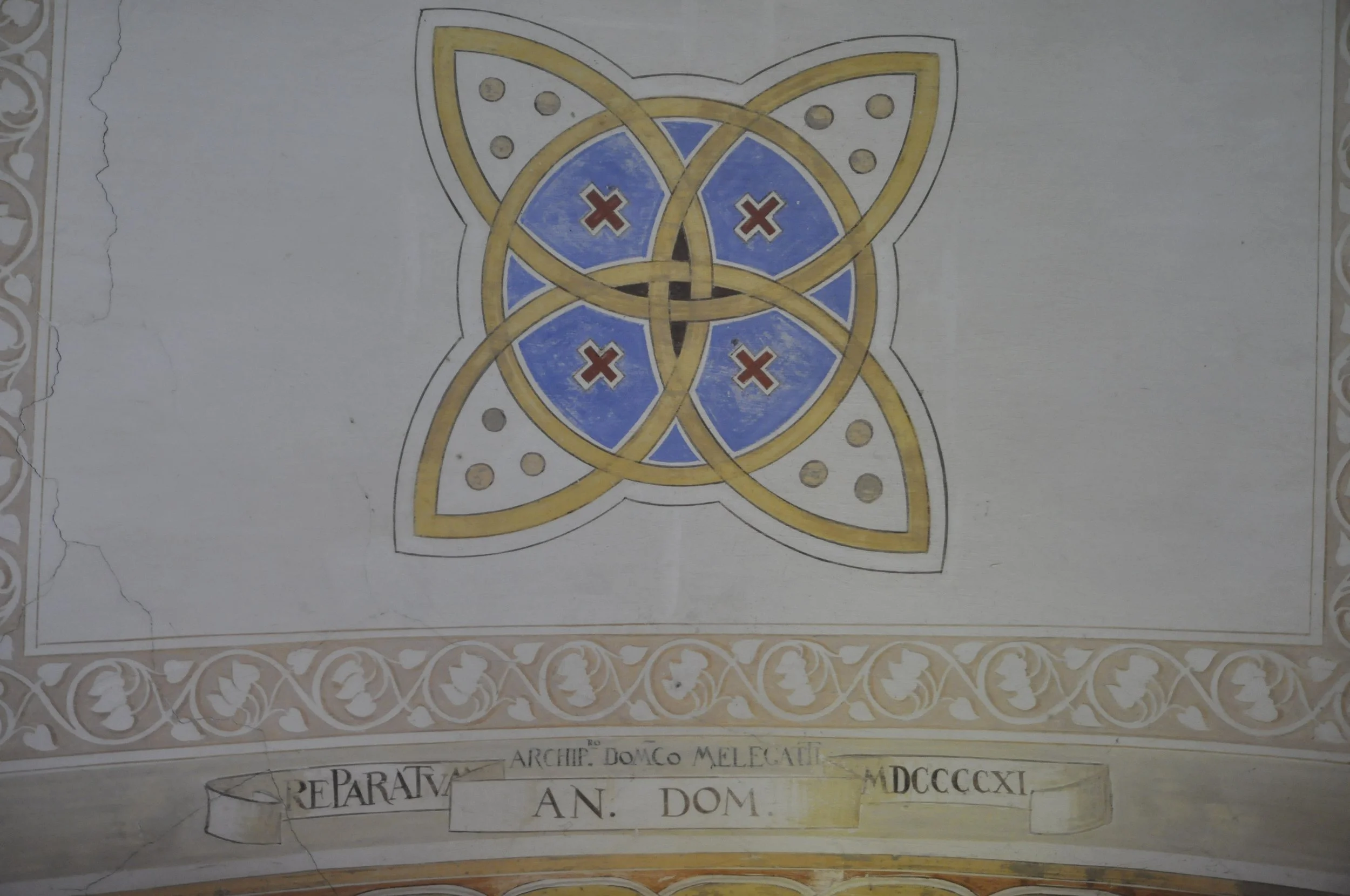
The last restoration of the little church dates back to 1911, and it is believed that the original designs were revived at that time. However, as this is a relatively small building, the available information is rather limited.

FROM STONE TO BOTTLE
Among the decorative motifs present in the Church of San Donino, we selected one to adopt as our emblem.
We created nothing new: that sign was already here, carved into stone for over seven centuries. We simply chose to listen to it.
Today, that ancient interlace has become the label of our Riviera del Garda Classico Rosso Groppello. A choice born from the desire to tell the story of the territory in its entirety: not only the vine and the wine, but also the history, the art, and the cultural roots that make this place unique.
A SYMBOL OF CONTINUITY
Like the interlaces carved in stone, wine too is the result of connections: between land and people, between past and present, between tradition and innovation.
An indigenous grape variety, vinified as in the past according to traditional and authentic practices: at Selva Capuzza, we produce Groppello as our grandparents did, without forcing techniques and with exclusively stainless steel vinification, in order to preserve and pass down knowledge deeply rooted in the land.
The Celtic knot, with its unbroken line, thus becomes a metaphor for our work: a thread that binds generations, safeguards memory, and looks toward the future.
Each bottle carries with it a fragment of that story carved in 1280. A label that is not merely aesthetic, but an authentic narrative of who we were and who we are.
Because sometimes it is enough to observe an ancient stone to understand that our identity had already been written, long before it was ever bottled.

For the Riviera del Garda Classico Chiaretto as well, we chose an image of the church: the colors of the symbol pair beautifully with the pink hues of the Chiaretto, creating a harmonious combination.